

Mostar, Bosnia and Herzegovina
General Information
Administrative status
City located in the south of Bosnia and Herzegovina and crossed by the Neretva river
Old Bridge Area of the Old City of Mostar
Registration Year
2005
Historical function
Symbol of international co-operation and coexistence of diverse cultural, ethnic and religious communities
Location and site
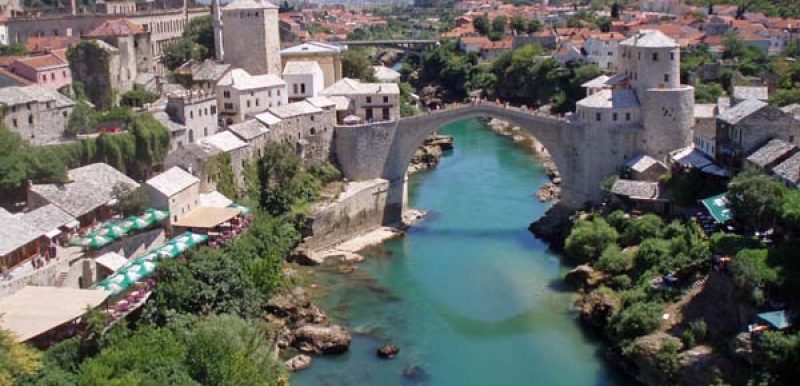
The historic town of Mostar, spanning a deep valley of the Neretva River, developed in the 15th and 16th centuries as an Ottoman frontier town and during the Austro-Hungarian period in the 19th and 20th centuries. Mostar has long been known for its old Turkish houses and Old Bridge, Stari Most, after which it is named. In the 1990s conflict, however, most of the historic town and the Old Bridge, designed by the renowned architect Sinan, were destroyed. The Old Bridge was recently rebuilt and many of the edifices in the Old Town have been restored or rebuilt with the contribution of an international scientific committee established by UNESCO. The Old Bridge area, with its pre-Ottoman, eastern Ottoman, Mediterranean, and western European architectural features, is an outstanding example of a multicultural urban settlement. The reconstructed Old Bridge and Old City of Mostar is the symbol of reconciliation, international cooperation, and of the coexistence of diverse cultural, ethnic, and religious communities.
Registration criteria
Criterion (vi): With the “renaissance” of the Old Bridge and its surroundings, the symbolic power and meaning of the City of Mostar – as an exceptional and universal symbol of the coexistence of communities from diverse cultural, ethnic, and religious backgrounds – has been reinforced and strengthened, underlining the unlimited efforts of human solidarity for peace and powerful cooperation in the face of overwhelming catastrophes.
Historical reference
- A settlement established as an urban structure in the 15th century on the crossing of a river and a land road was originally located in a valley of the Neretva River, between Hum Hill and the foot of the Velež Mountain. This relatively small settlement had two towers around the bridge, dating from 1459, as noted by written historical sources. The current name, Mostar, was mentioned for the first time in 1474 and derived from “mostari” – the bridge keepers. The historic town of Mostar developed in the 15th and 16th centuries as an Ottoman frontier town and during the short Austro-Hungarian period in the 19th and 20th centuries. Mostar has been long known for its old Turkish houses and the Old Bridge – Stari most, an extraordinary technological achievement of bridge construction. The historic part of Mostar is a result of interaction between the natural phenomena and human creativity throughout a long historical period. The essence of centuries-long cultural continuity is represented by the universal synthesis of life phenomena: the bridge and its fortresses – with the rich archeological layers from the pre-Ottoman period, religious edifices, residential zones (mahalas), arable lands, houses, bazaar, its public life in the streets and water. The architecture here presented a symbol of tolerance: a shared life of Muslims, Christians, and Jews. Mosques, churches, and synagogues existed side-by-side indicating that in this region, the Roman Catholic Croats with their Western European culture, the Eastern Orthodox Serbs with their elements of Byzantine culture, and the Sephardic Jews continued to live together with the Bosniaks-Muslims for more than four centuries. A specific regional architecture was thus created and left behind a series of unique architectural achievements, mostly modest in physical dimensions, but of considerable importance for the cultural history of its people. The creative process produced a constant flow of various cultural influences that, like streams merging into a single river, became more than a mere sum of the individual contributing elements.
- In the 1990 conflict, however, most of the historic town and the Old Bridge, a masterpiece designed by the famous architect, mimar Hajruddin (according to the design of his master teacher, great architect mimar Sinan), were destroyed. The Old Bridge was rebuilt in 2004 and many of the edifices in the Old Town were restored or rebuilt with the contribution of the international scientific committee established by UNESCO.
Photos

News
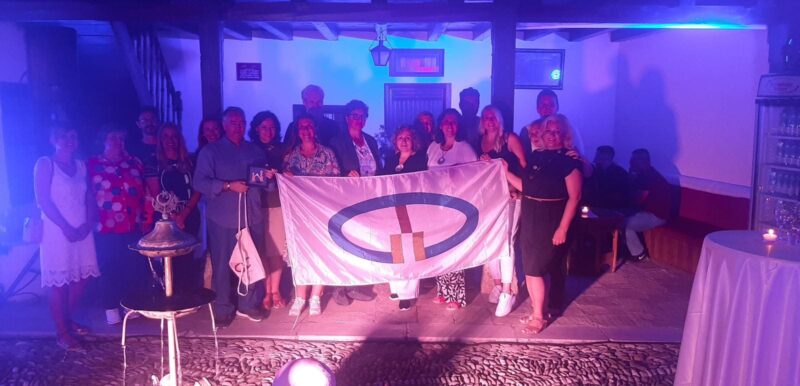
11 July 2023
New project meeting of the OWHC regional secretariat for southern Europe and the mediterranean and workshop about trades
Mostar, Bosnia and Herzegovina
Southern Europe and Mediterranean
Québec Roadmap
6 September 2021
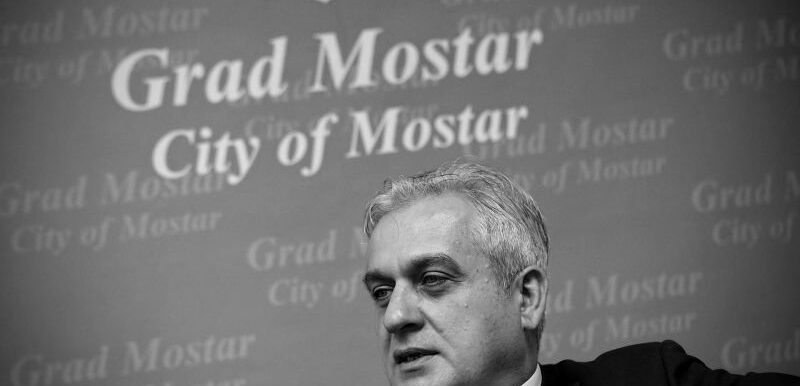
In memoriam of Ljubo Bešlić
Mostar, Bosnia and Herzegovina
Southern Europe and Mediterranean

11 September 2019
DAY OF SOLIDARITY IN MOSTAR
Mostar, Bosnia and Herzegovina
Southern Europe and Mediterranean
OWHC Day
25 September 2017
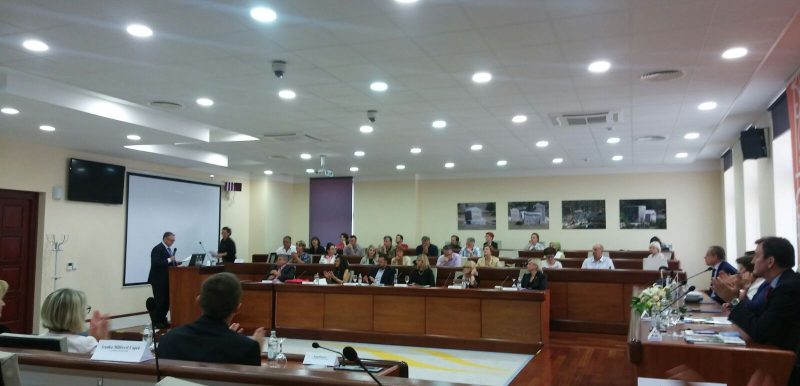
MOSTAR CELEBRATES AN INTERESTING CONFERENCE ABOUT “HANDICRAFTS- PAST, PRESENT AND FUTURE”
Mostar, Bosnia and Herzegovina
Southern Europe and Mediterranean
2 May 2012
Regional Conference of the Southern Europe / Mediterranean Secretariat in Mostar, Bosnia-Herzegovina, 24-26 May 2012
Mostar, Bosnia and Herzegovina
Contact
Mr. Mario Kordic
Mayor
City of Mostar
Hrvatskih branitelja bb
Mostar, Bosnia and Herzegovina
88000
036/44 74 09
Ms. Dragana Parmać
Chief of Urban Planning and Construction
City of Mostar
Kralja Zvonimira 14
MOstar, Bosnia and Herzegovina
88000
00387 36 355 781
[email protected]
Find Us

Espace Quatre Cents
100, Quai Saint-André, Bureau 140
Québec (Québec) G1K 3Y2
Canada
+1 418 692-0000
Confidentiality Policy
Social Media Policy