

Dubrovnik, Croatia
General Information
Administrative status
City of southern Croatia
Old City of Dubrovnik
Registration Year
1979
Historical function
Maritime trade
Location and site
The ‘Pearl of the Adriatic’, situated on the Dalmatian coast, became an important Mediterranean Sea power from the 13th century onwards. Although severely damaged by an earthquake in 1667, Dubrovnik managed to preserve its beautiful Gothic, Renaissance, and Baroque churches, monasteries, palaces, and fountains. Damaged again in the 1990s by armed conflict, it is now the focus of a major restoration program co-ordinated by UNESCO.
Urban morphology
Dubrovnik, which appears to advance into the sea, is built at the foot of Mount San Sergio. Inside its 13th-century rampart, its Baroque-inspired plan offers perspective views. From the mountain, it is possible to see parallel streets transform into stairs to access the terraces of the city. Towards the sea, the grid becomes less regular and opens up as it widens. The transversal artery, which runs parallel to the sea, becomes narrower from east to west (the direction in which the city developed) and exploits perspective views and distance.
Stone and brickwork together form a dense architectural fabric. Inside the massive fortification walls, large public, civic, and religious buildings date to the Renaissance. By their monumentality, they evoke the prosperous times of the small republic. The works of sculpture, in harmony with the urban landscape, remind us of the cultural enlightenment enjoyed by Dubrovnik.
Registration criteria
Criterion (i): Dubrovnik illustrates the willingness to create an urban landscape conceived like a work of art. As a museum city, it conserves both monuments constructed by great architects and a large number of dwellings of obvious architectural merit. This homogeneity in the quality of the built form is without equal elsewhere.
Criterion (iii): The city presents a unique testimony to the civilization of the Republic of Raguse.
Criterion (iv): The ramparts represent a remarkable effort to adapt its urban medieval enclosure to progress in the field of artillery and constitute one of the great references for 15th-century fortification history.
Historical reference
- Dubrovnik was originally a fortified island occupied by Latin natives. An arm of the sea separated it from a second center, Raguse, which was Slavic and antagonistic. Navigation and trade were its most important activities.
- In the 13th century, Raguse and Dubrovnik were joined. The arm of the sea then became the principal artery of the new city. The small Republic of Dubrovnik-Raguse took the form of a medieval city and was subjected to rigorous, premature, and exceptional urban planning. The urban center of the new republic was to be imposing. Its fleet was powerful as intense trade activity took place between Western Europe and the Balkans. On the seas, Dubrovnik rivaled Venice.
- In the 14th and 15th centuries, this maritime capital multiplied its architectural achievements, and the urban plan was established in the 16th century. For the Serbs, Dubrovnik opened the door to Latin culture and Western Europe.
- At the peak of its prosperity, in 1667, Dubrovnik was devastated by an earthquake. Its most essential original structures remained or were reconstructed. At the beginning of the 19th century, it was occupied by the troops of Napoleon I, and lost its independence.
Photos

News
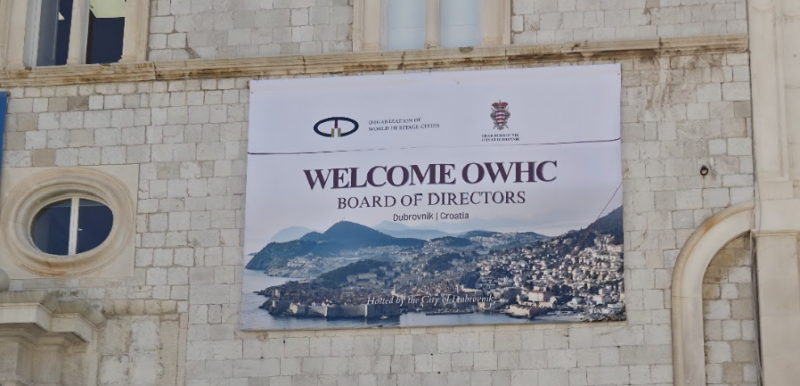
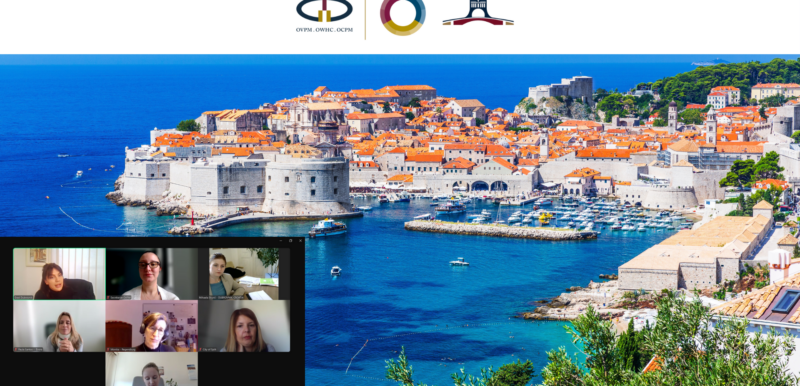
19 February 2025
Meeting of the Dubrovnik Collaborative Network
Dubrovnik, Croatia
Private: Collaborative Networks
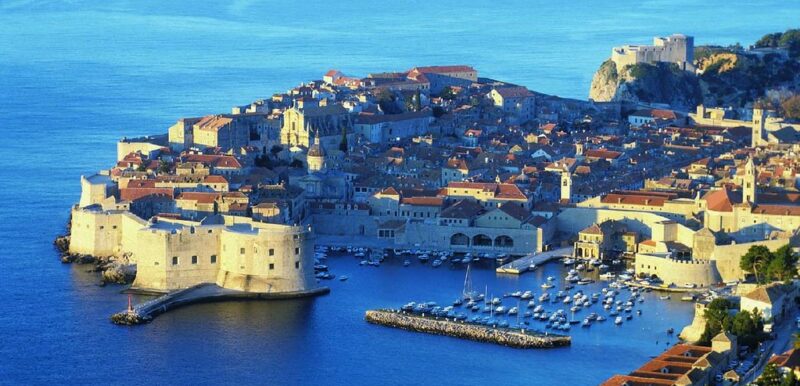
14 April 2021
Management Plan for UNESCO World Heritage site “The Old City of Dubrovnik”
Dubrovnik, Croatia
Eastern and Central Europe
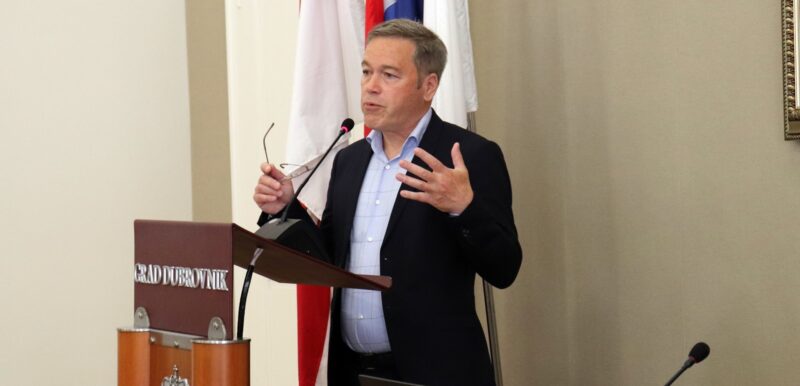
11 November 2013
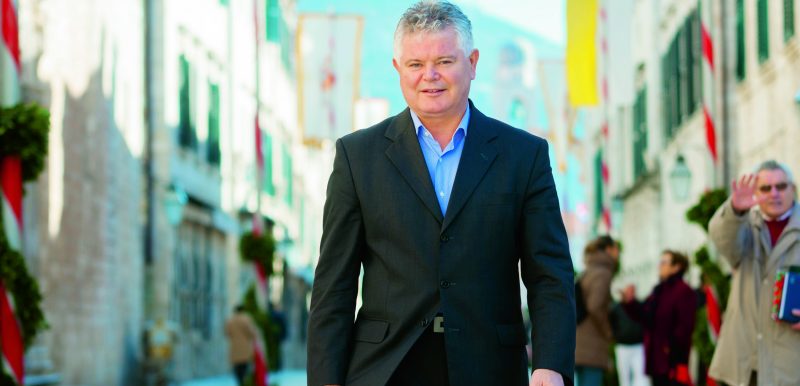
Mayors&Heritage: interview with the Mayor of Dubrovnik (Croatia), Dr. Andro Vlahušić
Dubrovnik, Croatia
Contact
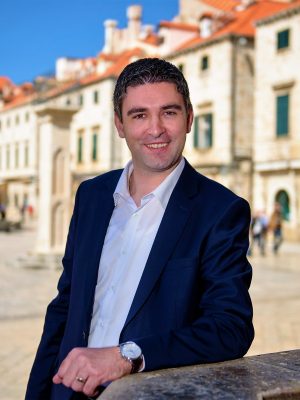
Mr. Mato Frankovic
Mayor
City of Dubrovnik
Pred Dvorom 1
Dubrovnik, Croatia
20000
+385.20 35.18.07
[email protected]
Ms. Aneta Vidak
Administrative Department for European Union Funds, Regional and International Cooperation
Office of the Mayor
Branitelja Dubrovnika 15
Dubrovnik, Croatia
HR-20 000
+385 20 351 751
[email protected]
Find Us

Espace Quatre Cents
100, Quai Saint-André, Bureau 140
Québec (Québec) G1K 3Y2
Canada
+1 418 692-0000
Confidentiality Policy
Social Media Policy